
The Raptor Maps application enables you to review infrared images associated with anomalies identified during a site inspection. The IR image shows a higher temperature for the anomalous area or component compared to adjacent areas or components. This is because defects dissipate solar energy as heat rather than converting it to current.
More serious defects have higher temperature differentials. Many manufacturers consider a temperature differential greater than 20 degrees evidence of a defective module, where the hotter module is defective. Anomalies are not always stable and can vary from one day to the next, depending on the conditions at the time of inspection.
Anomalies showing smaller temperature differentials, especially less than 10 degrees, may not require immediate attention but generally continue to degrade over time.
Common causes of anomalies include:
-
Installation damage
-
Local shading
-
Panel soiling
-
Nearby vegetation
-
Panel cracking
-
Manufacturing defects
-
Weather events (lightning, hail or wind)
-
Suboptimal grounding
-
Module degradation (for example, delamination)
-
Fuse or connector failure (for strings)
An RGB image can assist in determining the cause of the anomaly. For example, the RGB image confirms vegetation as the cause of this multi-cell anomaly:

The value of a solar inspection is that it provides insight into the impact of anomalies on power production.
Due to solar-site design, some anomalies have bigger impacts than others. A solar site uses silicon solar cells to convert the energy of sunlight into electricity. The power generated is made available to the grid by means of strings, combiners and finally inverters, which feed into the point of interconnection.
When assessing anomaly impacts on power production, it’s important to consider that outages of components such as combiners and inverters result in a greater reduction in power production than anomalies of individual cells.
Anomaly Impact DC

Raptor Maps uses a power factor to take into account that, for example, a string outage will have much greater impact on overall power production than a cell outage. For more information, refer to this page on Calculating Impact from anomalies.
Raptor Maps analysis checks for the following anomalies, depending on the Order Type:
See here for Substation Inspection P-Ratings
| Anomaly | Definition | Default Priority | |
| Cell | A hot spot occurs with square geometry in a single cell. | Low | 
|
| Cell Low | This is a cell anomaly where the temperature of an anomalous area is less than 10°C higher than adjacent areas. | Low | |
| Cell Medium | This is a cell anomaly where the temperature of an anomalous area is 10-20°C higher than adjacent areas. | Medium | |
| Cell High | This is a cell anomaly where the temperature of an anomalous area is 20°C higher than adjacent areas. | High | |
| Cell Multi | This anomaly consists of hot spots occurring with square geometry in multiple cells. | Low | 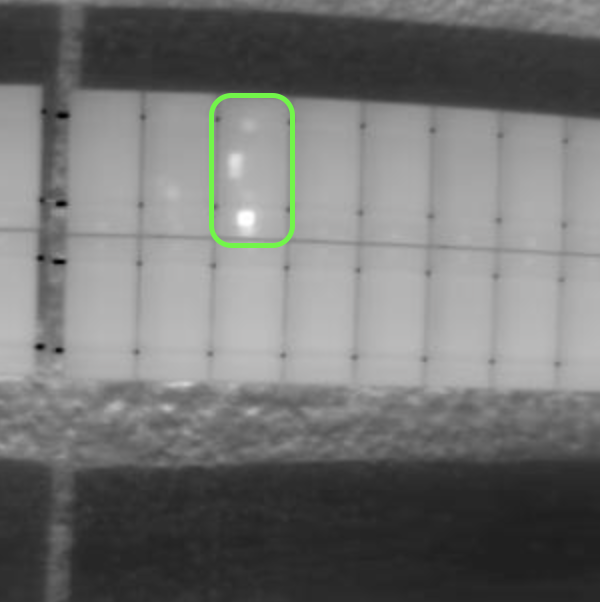
|
| Cell Multi Low | In this type of cell multi anomaly, the temperature of an anomalous area is less than 10°C higher than adjacent areas. | Low | |
| Cell Multi Medium | In this type of cell multi anomaly, the temperature of an anomalous area is 10-20°C higher than adjacent areas. | Medium | |
| Cell Multi High | In this type of cell multi anomaly, the temperature of an anomalous area is 20°C higher than adjacent areas. | High | |
| Circuit | A circuit anomaly is a series of adjacent offline strings. This anomaly type usually affects fewer strings than a combiner anomaly, depending on the electrical wiring and the as-built layout. |
None | 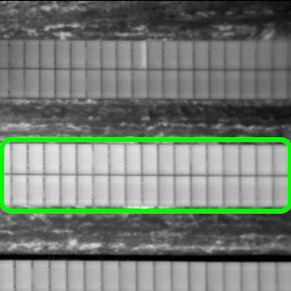
|
| Combiner | A combiner combines many strings into a larger flow of DC (direct current). A combiner anomaly shows a fault in contiguous strings matching the combiner layout. |
High | 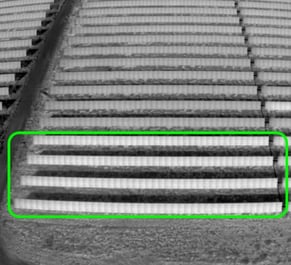
|
| Cracking | This module anomaly is caused by cracking on the module surface. | High | 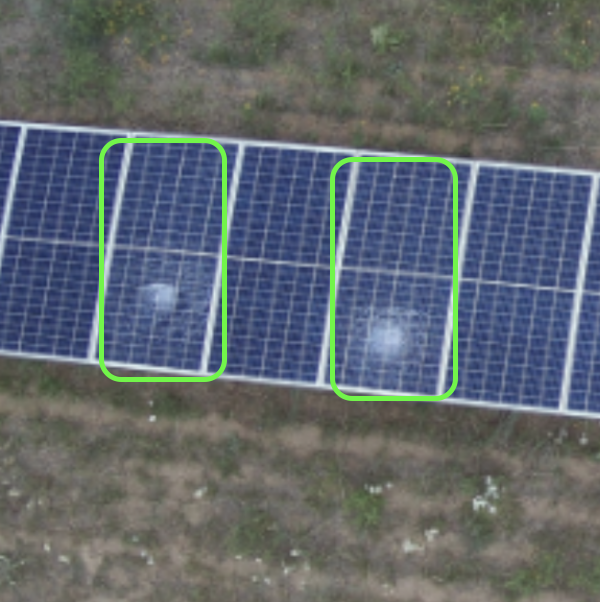
|
| Damaged | Damage anomalies result from a bent, misplaced or warped module. They may also come from a heavily cracked module that is damaged beyond the module surface. | High | 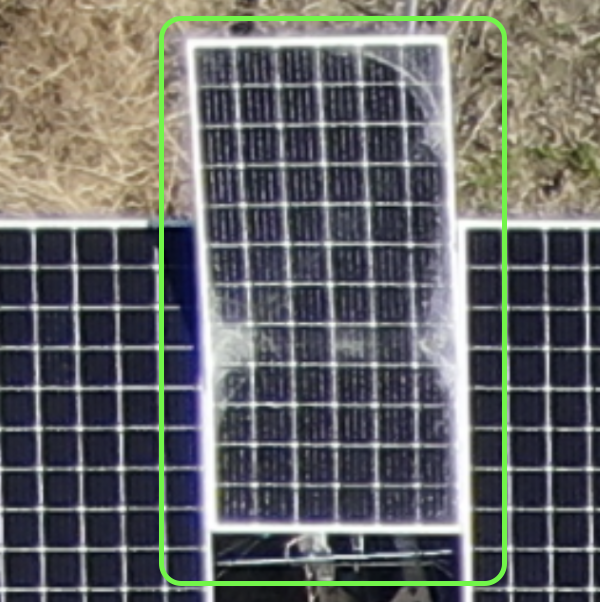
|
| Delamination | This module anomaly is due to compromised adhesion between glass, encapsulant or layers. The layers may be the active layers and/or the back layers. It is more common with thin-film modules. | High | 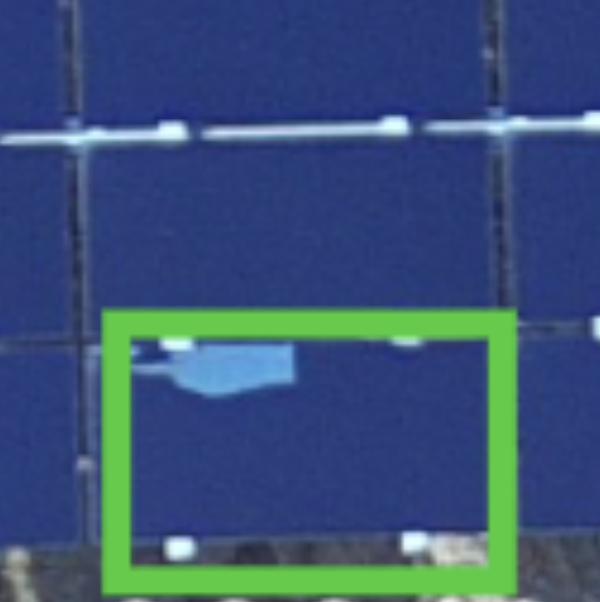
|
| Diode | A bypass diode provides a current path around a faulty cell or module. A diode anomaly indicates an activated bypass diode, typically 1/3 of the module. |
Medium | 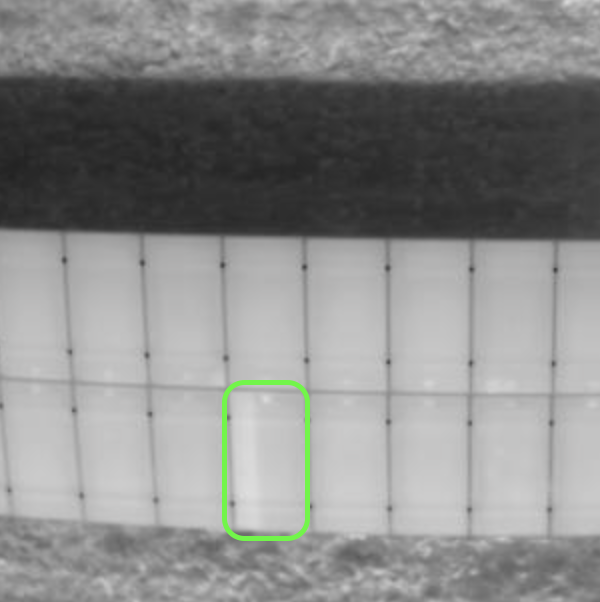
|
| Diode Multi | There are multiple activated bypass diodes, typically affecting % of the module. | Medium | 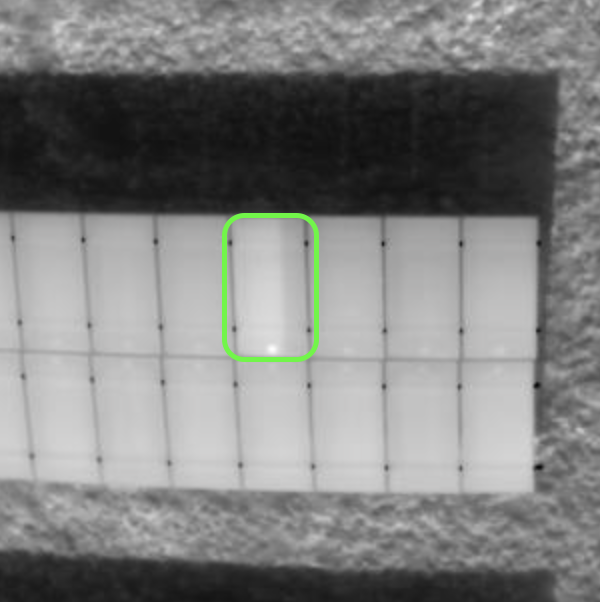
|
| Helix Damage | Permanent damage to panels caused as a result of a helix fault. | None | 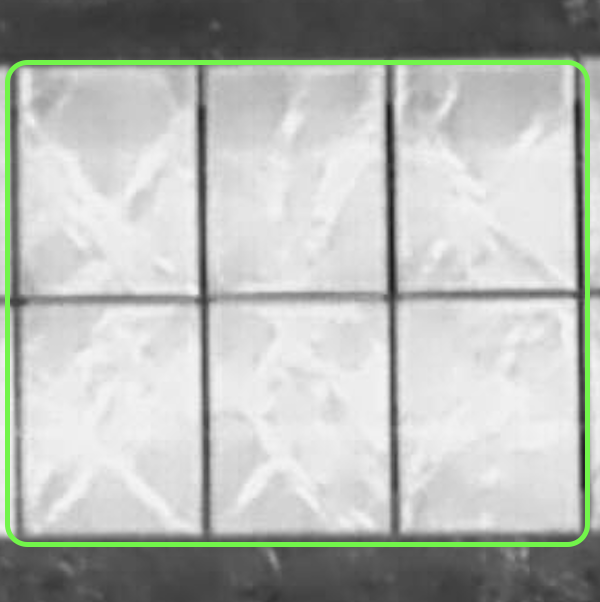
|
| Helix Fault | A fault in trackers causing a helix in the racking. | None | 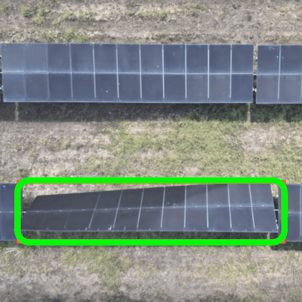
|
| Hot Spot | This shows an anomalous spot on a cell. | Low | 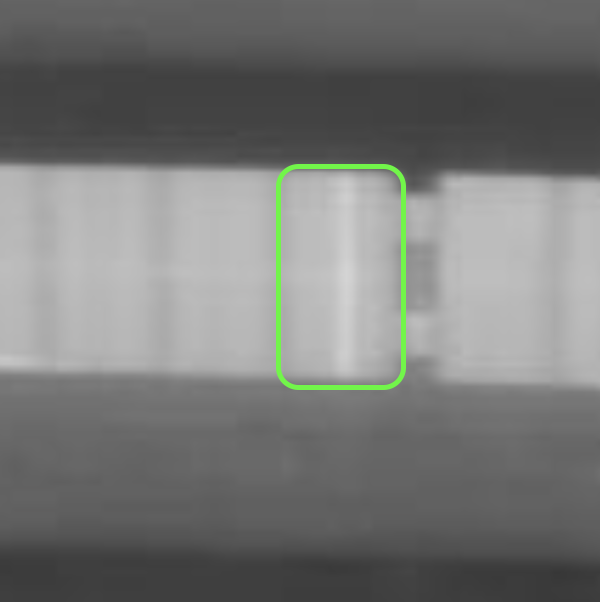
|
| Hot Spot Low | A hot spot has occurred where the temperature of the anomalous area is less than 10°C higher than adjacent areas. | Low | |
| Hot Spot Medium | A hot spot has occurred where the temperature of the anomalous area is 10-20°C higher than adjacent areas. | Medium | |
| Hot Spot High |
A hot spot has occurred where the temperature of the anomalous area is 20°C higher than adjacent areas. |
High | |
| Hot Spot Multi |
There are multiple hot spots on a thin-film module. |
Low | 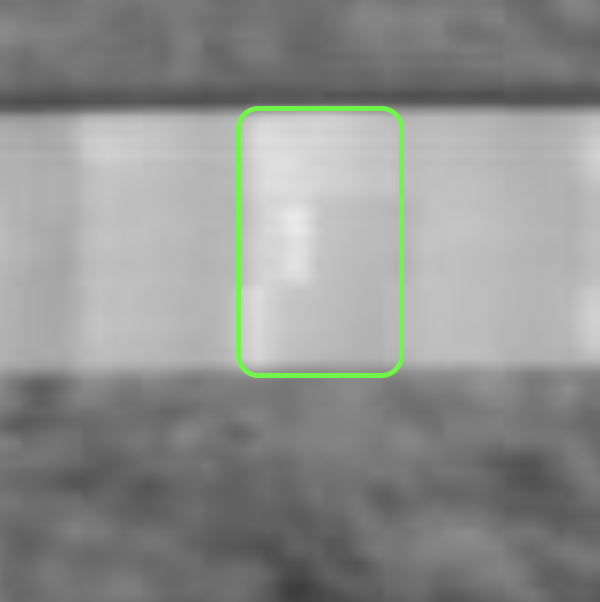
|
|
Hot Spot Multi Low |
In this hot spot multi anomaly, the temperature of the anomalous area is less than 10°C higher than adjacent areas. |
Low |
|
|
Hot Spot Multi Medium |
In this hot spot multi anomaly, the temperature of the anomalous area is 10-20°C higher than adjacent areas. |
Medium |
|
|
Hot Spot Multi High |
In this hot spot multi anomaly, the temperature of the anomalous area is 20°C higher than adjacent areas. |
High |
|
|
Internal Short Circuit |
Multiple cell anomalies have happened as a result of a short circuit. |
Low | 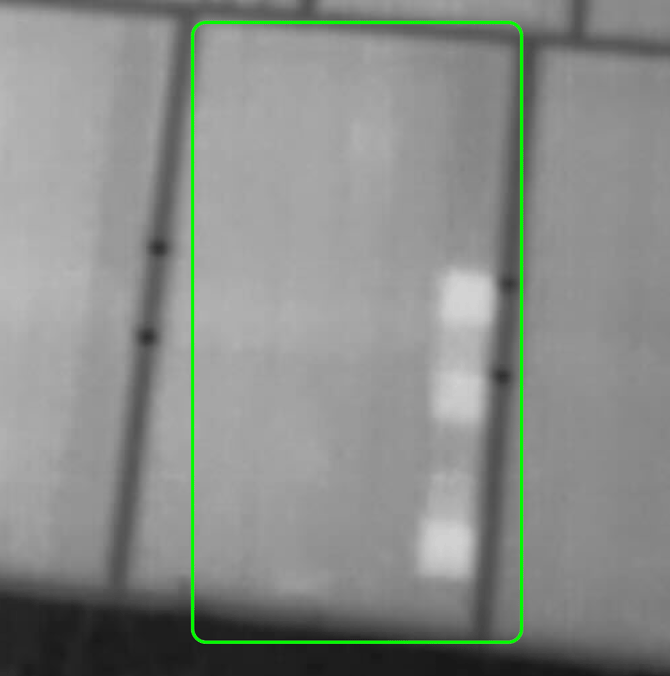
|
|
Inverter |
An inverter converts the DC current of many combiners into usable AC. An inverter anomaly shows a fault in contiguous strings matching the inverter layout. |
High | 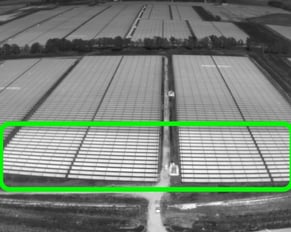
|
|
Junction Box |
A junction box is an enclosure on the module that connects the PV strings. A junction-box anomaly is a hot spot at the junction-box location on the module. |
Low | 
|
|
Junction Box Low |
In this junction-box anomaly, the temperature of the anomalous area is less than 10°C higher than adjacent areas. |
Low | |
|
Junction Box Medium |
In this junction-box anomaly, the temperature of the anomalous area is 10-20°C higher than adjacent areas. |
Medium | |
|
Junction Box High |
In this junction-box anomaly, the temperature of the anomalous area is 20°C higher than adjacent areas. |
High | |
|
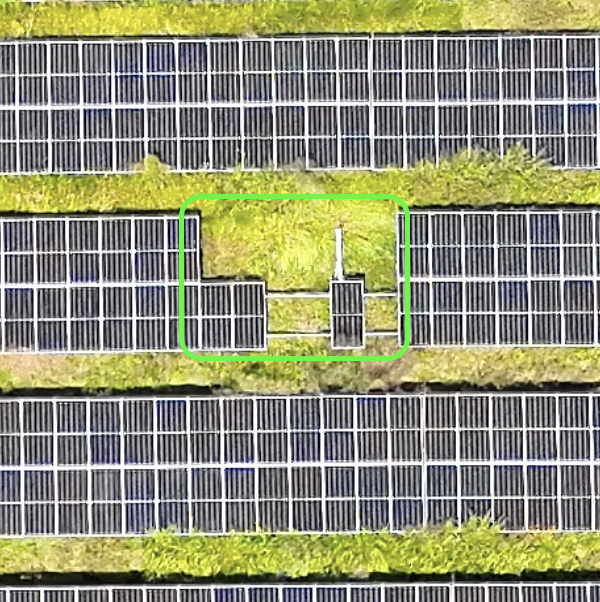
Missing |
The module is present on the as-built but missing from the PV system. |
High |
|
|
Module |
The entire module is heated or offline. |
High | 
|
|
Physical Obstruction |
A physical obstruction or object on the surface of the module that is blocking direct sunlight or causing close proximity shading. |
Low | 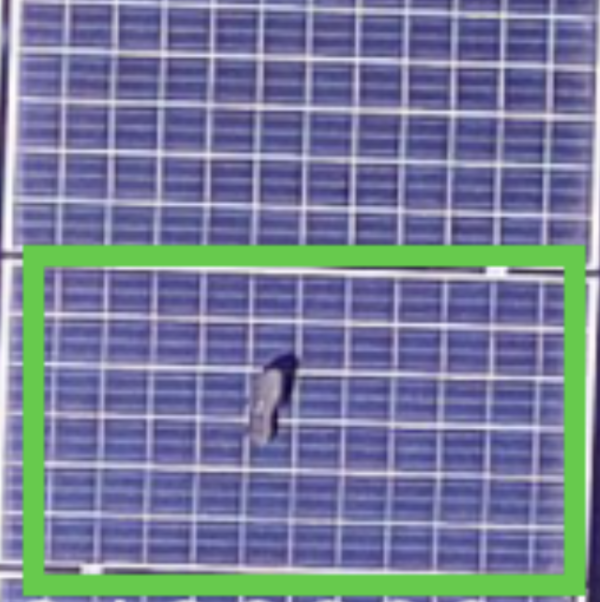
|
|
Reverse Polarity |
A module anomaly has occurred due to incorrect wiring. |
High | 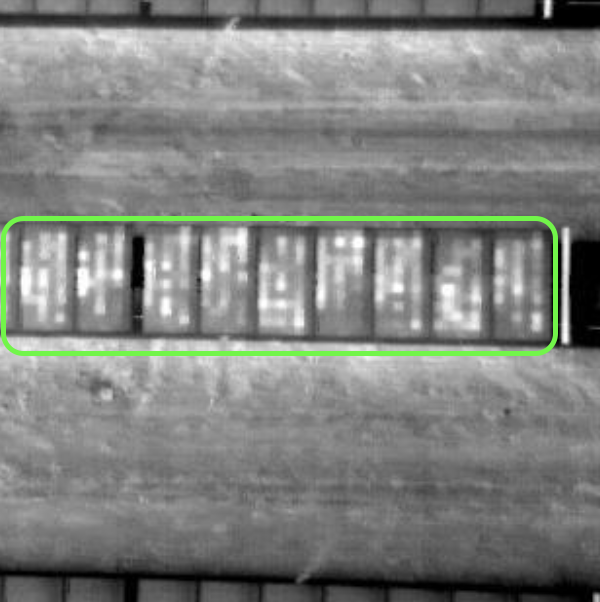
|
| Shading |
Sunlight is obstructed by trees, buildings, etc., causing shading/shadows across panels. |
Low | 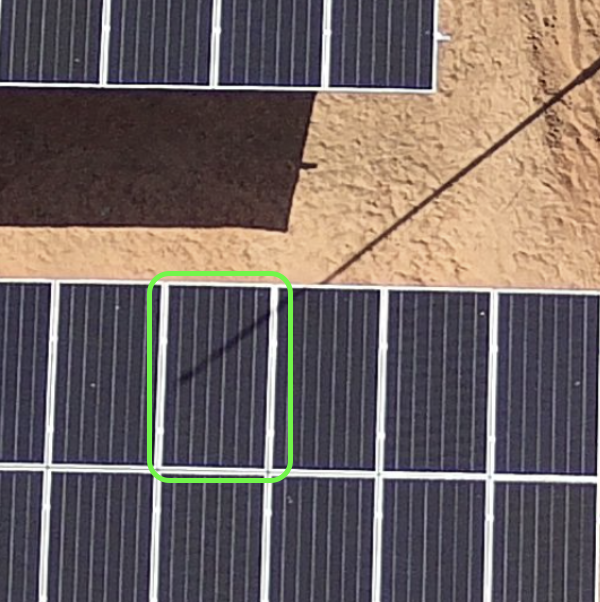
|
| Soiling |
Dirt, dust or other debris is on the surface of the module. |
Low | 
|
|
Spare Module |
The module is not present on the as-built or is marked as a spare panel. |
None |
|
|
String |
A string consists of an individual set of modules connected in series. A string anomaly shows a fault in contiguous modules matching the string layout. |
High | 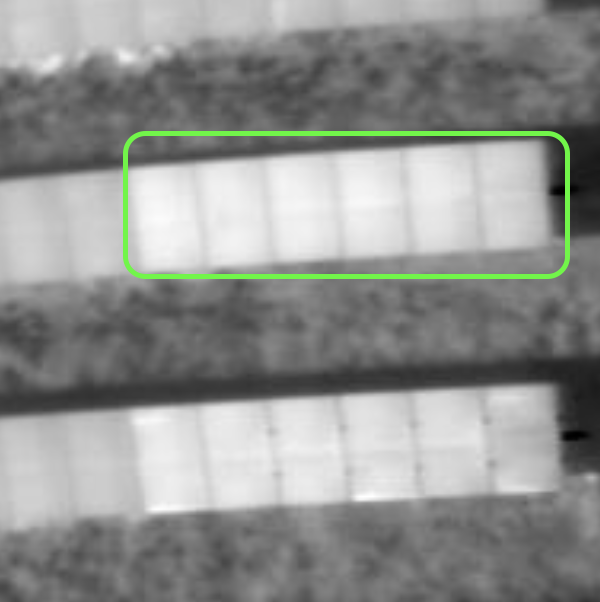 |
| Tracker |
Tilt tracker position is affecting power production. |
High | 
|
| Vegetation |
Panels are physically impacted by vegetation. |
Low | 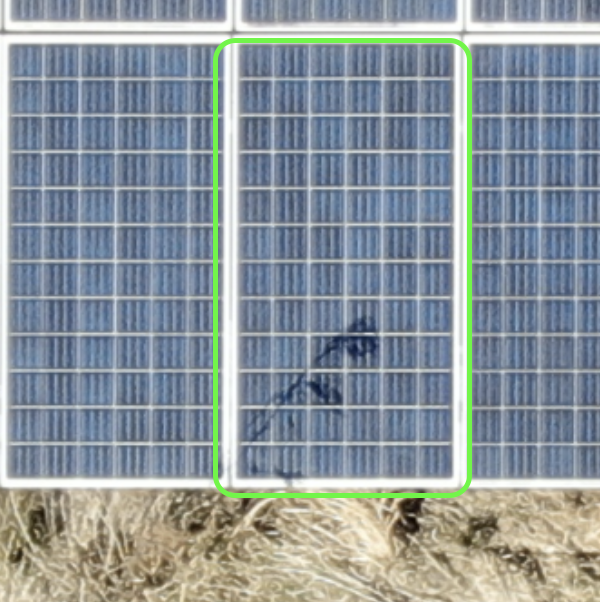
|
The Substation Inspections must assign a Severity Rating for each discrepancy found.This rating system is known as a Priority Rating (P-Rating). The P-Rating scale is as follows:
|
P-Rating |
If visual discrepancy: |
If IR discrepancy: |
|
P1 |
Severe discrepancy. At risk of imminent failure. A failure would cause a system malfunction OR is an immediate safety hazard |
>90°C Temperature difference (ΔT) based on comparisons between similar components under similar loading. |
|
P2 |
Imminent discrepancy. If not addressed, there could be a system malfunction within the near future. |
60°C - 90°C Temperature difference (ΔT) based on comparisons between similar components under similar loading. |
|
P3 |
Moderate discrepancy. The discrepancy will need to be considered for repair. |
30°C - 60°C Temperature difference (ΔT) based on comparisons between similar components under similar loading. |
|
P4 |
Sub-moderate discrepancy. The discrepancy is not an immediate hazard. This discrepancy should be monitored for further degradation |
5°C - 30°C Temperature difference (ΔT) based on comparisons between similar components under similar loading. |